
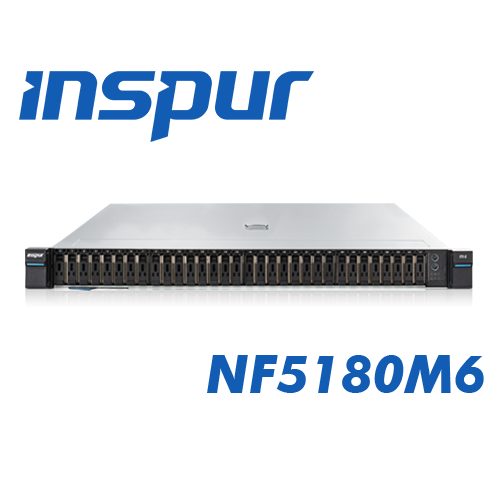
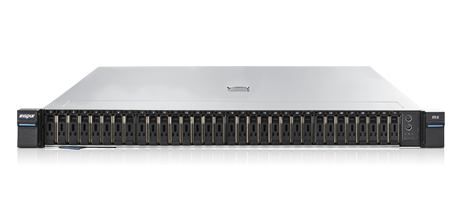

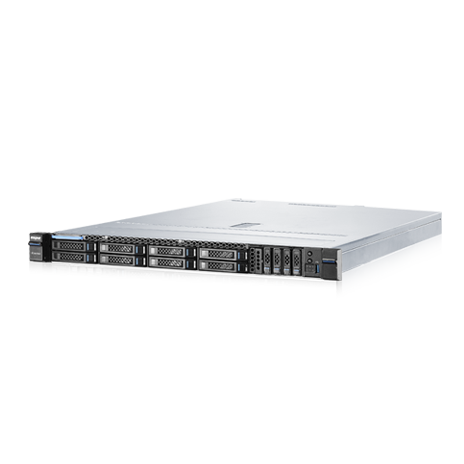
NF5180M6 can maximize the design of performance, density and scalability, which is suitable for high-performance computing, virtualization and other computation-intensive application scenarios, and can meet the deployment of high-density data centers.
Features
Extraordinary Performance and Efficiency
Powered by the third generation of the Intel® Xeon® Scalable processor, a single CPU supports up to 40 cores and 80 threads. Key CPU specifications include maximum TDP of 270W, maximum turbo frequency of 3.6GHz, and 3x 11.2GT/s UPI links.
NF5180M6 supports 16 DCPMM memories with up to 512GB and 3200MHz per memory, using which data loss does not easily occur in case of power outage, while memory capacity and bandwidth are not even reduced.
NF5180M6 supports up to 12 hot-plug NVMe SSDs in all-flash configurations, providing a ten-fold IOPS increase compared to SATA SSDs for high-end enterprise applications.
NF5180M6 supports up to 32 hot-plug E1.S SSDs in all-flash configurations, enabling higher IOPS in an even compact unit compared to NVMe SSDs.
Extreme Scalability and Configurations
NF5180M6 supports up to 12 front 2.5-inch SAS/SATA/NVMe SSDs; optional 2 rear 2.5-inch SAS/SATA SSDs; or 32 E1.S SSDs.
NF5180M6 supports OCP3.0 option with a variety of interface to choose (1G, 10G, 25G, 40G, 100G, 200G).
Up to 3 PCIe 4.0 slots (3 × PCIe x16) are used to optimize I/O. Front M.2/E1.S SSD options meet diverse storage needs.
Highly Reliable and Easy-to-Use
Hardware Design: Overcurrent and overvoltage protection design for the motherboard and backplane and fool-proof designs for all on-board connectors and cables, helping avoid electrical issues.
Structure Safety: Chassis panels and top cover are equipped with locks to prevent dangerous operations.
Hardware Interface: All physical IO interfaces are clearly defined, and no ambiguity are allowed. Interfaces used for maintenance have an access control mechanism to protect the system from malicious operations.
Firmware Security: Image files are signed with a secure encryption algorithm before release, and the signature needs to be verified when the firmware is updated, thus ensuring the integrity and validity of the firmware.
ISBMC4 Intelligent Management System supports a series of security features, such as identification and authentication, authorization and access control, Web security configuration, and audit log, providing security capabilities that are higher than the industry average.
TPM2.0 is used to protect data security and server boot.
Reviews
There are no reviews yet.